.png?width=221&height=58&name=logo%20(3).png)
A Seat Belt Audit Is One of the Most Important Safety Checks You Can Perform
Fleet managers and safety directors track dozens of risks: vehicle condition, operator behavior, maintenance, compliance, and OSHA requirements. Amid all of this, one critical safety item often gets overlooked:
Seat belts.
Worn belts.
Hidden belts.
Non-functioning retractors.
Black belts that hide non-compliance.
Belts that operators “pretend buckle.”
Seat belt sensors giving false data.
Damaged webbing that goes unnoticed.
These small failures can lead to major injuries, OSHA citations, and preventable liability exposure.
This fleet safety checklist gives you a clear system for auditing seat belts across commercial vehicles, forklifts, construction equipment, emergency vehicles, and municipal fleets—and shows why many organizations add high-visibility red seat belts as part of their risk-reduction strategy.
Upgrade your fleet with red belts here:
https://www.myairbags.com/product/red-colors-seat-belt-webbing-replacement/
Why Regular Seat Belt Audits Matter for Fleets
Seat belt condition affects:
• OSHA and DOT compliance
• Workers’ compensation risk
• In-cab camera scoring
• Insurance claim defensibility
• Injury severity in collisions
• Daily safety checks
• Operator accountability
• Supervisor enforcement
A neglected seat belt system is a weak point that will eventually lead to an incident.
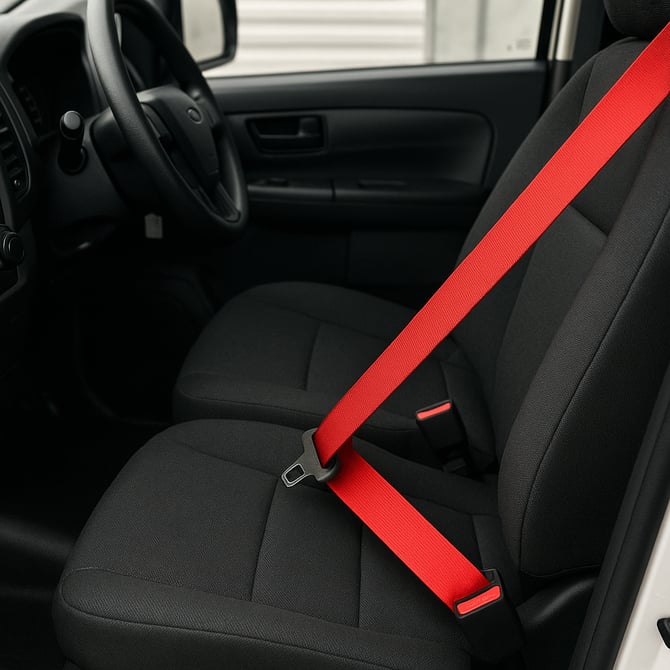
Red belts make auditing easier and more accurate because wear, misuse, and non-compliance are instantly visible.
Fleet Seat Belt Audit Checklist (Complete Guide)
Use this checklist across all vehicles and heavy equipment in your fleet.
1. Inspect Webbing Condition
Check every belt for:
• Cuts
• Fraying
• Burn marks
• Chemical exposure
• Sun damage
• Hardening or brittleness
• Mold or moisture damage
• Faded color (indicating age or UV wear)
• Weak spots from years of tension
If the webbing shows any of these issues, the belt should be rebuilt.
Red belts help here because damage is far easier to see.
2. Check Retractor Function and Speed
A proper retractor should:
• Pull out smoothly
• Retract quickly without slack
• Lock when tugged sharply
• Lock when vehicle motion triggers the pendulum
• Not rattle internally
A slow or sticky retractor is a safety risk and must be repaired.
3. Test Buckle and Latch Integrity
The buckle must:
• Click firmly
• Release smoothly
• Show no cracks in the plastic
• Have no corrosion on internal metal
• Engage the switch reliably
Faulty buckles are a leading cause of false warning lights and failed seat belt use.
4. Inspect Mounting Points and Bolts
Check for:
• Loose bolts
• Rust
• Missing hardware
• Cross-threading
• Incorrect aftermarket bolts
• Damage from prior repairs
Mounting integrity matters just as much as the belt itself.
5. Verify Seat Belt Sensors and Warning Systems
Scan or test:
• Buckle switch
• Occupant detection sensors
• Pretensioner wiring
• Airbag system integration
• Retraction sensor (if equipped)
• Rear seat indicator system
Fleet vehicles often experience wear-related electrical issues that trigger false alerts.
6. Audit Visibility and Compliance Factors
Look for:
• Black belts that disappear into uniforms
• Crews who “pretend buckle”
• Forklift operators wearing belts incorrectly
• Drivers hiding belts under clothing
• Cameras unable to verify belt use
• Supervisors unable to see belts on walk-throughs
This is where high-visibility red belts dramatically improve safety audits.
7. Confirm Belt Usage During Spot-Checks
Unannounced inspections expose real usage patterns.
Check:
• Operators during pre-shift
• Forklift drivers exiting dock areas
• Drivers entering or exiting vehicles
• Crews leaving the station or yard
• Lone workers in remote areas
If compliance is inconsistent, red belts may be necessary.
8. Document Findings and Corrective Actions
Every audit should log:
• Date
• Vehicle ID
• Operator (if applicable)
• Damage found
• Compliance issues
• Sensor faults
• Upgrades needed
• Next inspection date
Consistent documentation helps with OSHA, DOT, and insurance reviews.
Common Questions:
“How often should fleets audit seat belts?”
Monthly is ideal for busy fleets; quarterly is acceptable for low-usage vehicles.
“What is the main problem found in seat belt audits?”
Worn or frayed belts, slow retractors, and operators not wearing belts.
“How do I make seat belt compliance easier to enforce?”
Upgrade to high-visibility red belts so compliance can be verified visually.
“Do OSHA inspections check seat belt condition?”
Yes. OSHA evaluates seat belt use, condition, and enforcement.
“Can damaged belts be repaired?”
Yes. Rewebbing restores belts to OEM-grade condition.
Why Many Fleets Upgrade to Red Seat Belts After Their First Audit
Audits reveal a pattern in almost every fleet:
• Operators hide black belts
• Supervisors can’t see belts from a distance
• Cameras can’t detect belt usage
• Damage on black belts is hard to spot
• False compliance is common
• Belt-related warning lights are ignored
• Enforcement becomes a constant battle
High-visibility red belts solve these problems immediately.
They allow:
• Faster inspections
• Stronger compliance
• More accurate camera verification
• Improved operator behavior
• Better documentation
• Reduced OSHA risk
• Lower injury severity
• Fewer repeat violations
For most fleets, red belts become standard after the first large-scale audit.
Improve Fleet Safety With High-Visibility Red Seat Belts
A strong seat belt audit program depends on visibility, consistency, and reliable equipment. MyAirbags rebuilds your existing seat belts with OEM-grade red webbing to improve compliance, reduce injury severity, and support your entire safety management system.
Upgrade your fleet with red belts here:
https://www.myairbags.com/product/red-colors-seat-belt-webbing-replacement/