.png?width=221&height=58&name=logo%20(3).png)
A Simple Upgrade With Major Safety Impact
Fire departments operate in some of the most unpredictable conditions any fleet faces. Crews move quickly. Scenes evolve rapidly. Vehicles respond under pressure and intensity. Because of that, even basic safety equipment—like seat belts—must be unmistakable and enforceable.
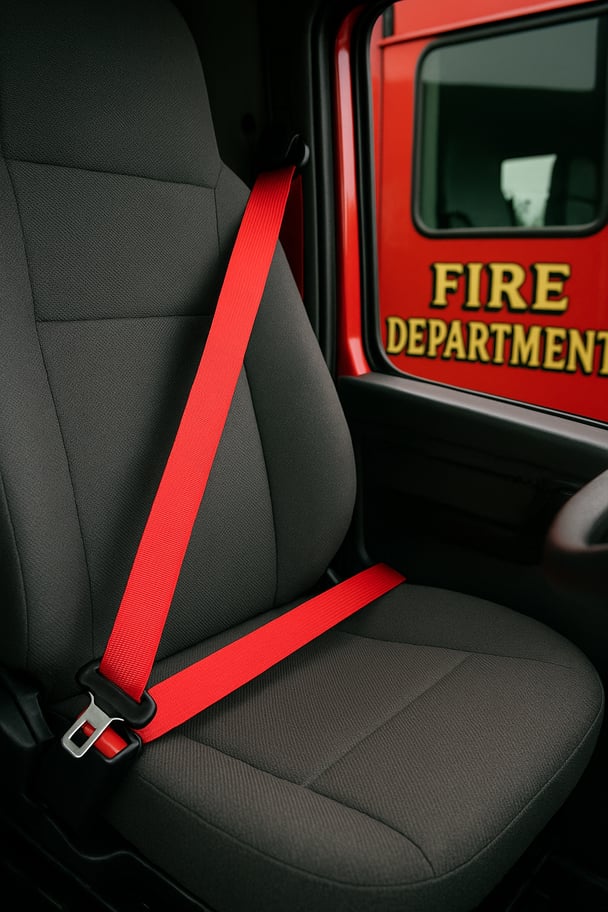
That’s why many fire departments now require high-visibility red seat belts in engines, ladders, rescues, battalion vehicles, and specialty units.
The purpose isn’t cosmetic.
It’s safety, accountability, and compliance.
Red belts allow officers to verify buckle-in status instantly before the apparatus moves. This reduces liability and reinforces the safety culture that fire services depend on.
Upgrade your fire department’s belts here:
https://www.myairbags.com/product/red-colors-seat-belt-webbing-replacement/
Why Red Seat Belts Are Becoming Standard in Fire Apparatus
1. Visibility During High-Pressure Departures
When a call hits, companies move fast.
Seat belt checks must happen immediately.
Red belts give drivers and officers instant confirmation that every member is buckled.
They stand out clearly against:
• Turnout gear
• EMS uniforms
• Wildland gear
• Black or gray interiors
• Low lighting inside the cab
With red belts, compliance is visible in a single glance.
2. NFPA, OSHA, and Insurance Considerations
NFPA 1500 requires that all firefighters must be seated and belted whenever the apparatus is in motion.
OSHA requires seat belt use in commercial and emergency vehicles.
Insurance carriers expect verifiable compliance.
Red belts strengthen this requirement because:
• They are visually easy to inspect
• They reduce “false compliance”
• They help departments prove belt use after incidents
• They speed up pre-movement checks
The color isn’t mandated, but it dramatically simplifies compliance.
3. Preventing False Compliance (A Serious Problem in Emergency Services)
Across emergency fleets, officers report common issues like:
• Members buckling behind their SCBA straps
• Belts slipping under turnout jackets
• Members pulling the belt across but not clicking
• Belts disappearing under radio harnesses
• Black belts blending into gear, making checks difficult
Red belts eliminate ambiguity.
They expose non-use immediately and remove any guesswork.
4. Improved Post-Incident Documentation
After collisions, rollovers, or hard brakes, one of the first questions asked is:
“Was the firefighter wearing a seat belt?”
Red belts make verification easier through:
• Dash cams
• Officer inspections
• Accident reports
• Insurance reviews
Clarity protects the department and the firefighter.
5. Stronger Safety Culture and Accountability
Firefighters take pride in doing things correctly.
But in fast-moving environments, shortcuts happen.
Red belts reinforce:
• Crew discipline
• Officer-led accountability
• Standardization across apparatus
• A “belt up every time” mentality
Departments consistently report higher compliance after the upgrade.
How to Retrofit Older Fire Trucks With Red Seat Belts
Most older fire trucks do not need full seat belt replacements.
They only need new red webbing installed on the existing retractors and hardware.
This keeps costs low and preserves OEM fitment.
Step 1: Remove the Existing Seat Belts
You simply unbolt:
• The retractor assembly
• The lap belt anchor
• The buckle receiver
This can usually be done in under 10 minutes per seating position.
Step 2: Ship the Belts to a Professional Rewebbing Service
A certified rewebbing process includes:
• Removal of old webbing
• Installation of new red OEM-grade webbing
• Inspection and repair of the retractor
• Load-bearing stitching identical to manufacturer patterns
• Cleaning and lubrication of internal components
• Functional testing before return
Your original hardware is retained.
This is critical for compliance because many older trucks use specialty mounting hardware that cannot be sourced new.
Step 3: Reinstall the Upgraded Red Belts
Reinstallation mirrors removal:
-
Bolt in the retractor
-
Secure the lower mount
-
Torque the buckle receiver
-
Perform a pull-and-lock test
-
Document the retrofit date for your fleet records
Departments typically upgrade all belts across the apparatus at once.
Common Questions Fire Departments Ask
“Why do fire trucks use red seat belts?”
To increase visibility and allow officers to verify that all firefighters are buckled before the apparatus moves.
“Are red seat belts legal for fire engines?”
Yes. NFPA and OSHA require proper seat belt use but do not restrict belt color.
“Can older fire trucks be upgraded to red belts?”
Yes. You can reweb the existing belts with new red webbing while keeping the original hardware.
“Does red webbing affect NFPA compliance?”
No. Compliance depends on performance and proper use, not color.
“Do red belts show up better on dash cams?”
Yes. Red belts are significantly easier to verify on video.
Why Red Seat Belts Are a Smart Upgrade for Fire Departments
The benefits stack up quickly:
• Faster compliance checks
• Stronger NFPA 1500 alignment
• Reduced liability
• Higher safety culture adoption
• Better training reinforcement
• Clearer post-incident reporting
• Lower injury severity
• Improved apparatus readiness
For how inexpensive and fast the upgrade is, the safety return is unusually high.
Retrofit Your Fire Apparatus With High-Visibility Red Seat Belts
MyAirbags provides OEM-grade red seat belt rewebbing for fire engines, ladder trucks, rescues, EMS units, and municipal vehicles. You keep your original hardware. You get brand-new high-visibility red webbing that improves safety and compliance instantly.
Upgrade your fire department’s belts here:
https://www.myairbags.com/product/red-colors-seat-belt-webbing-replacement/